About
Who is here, and why
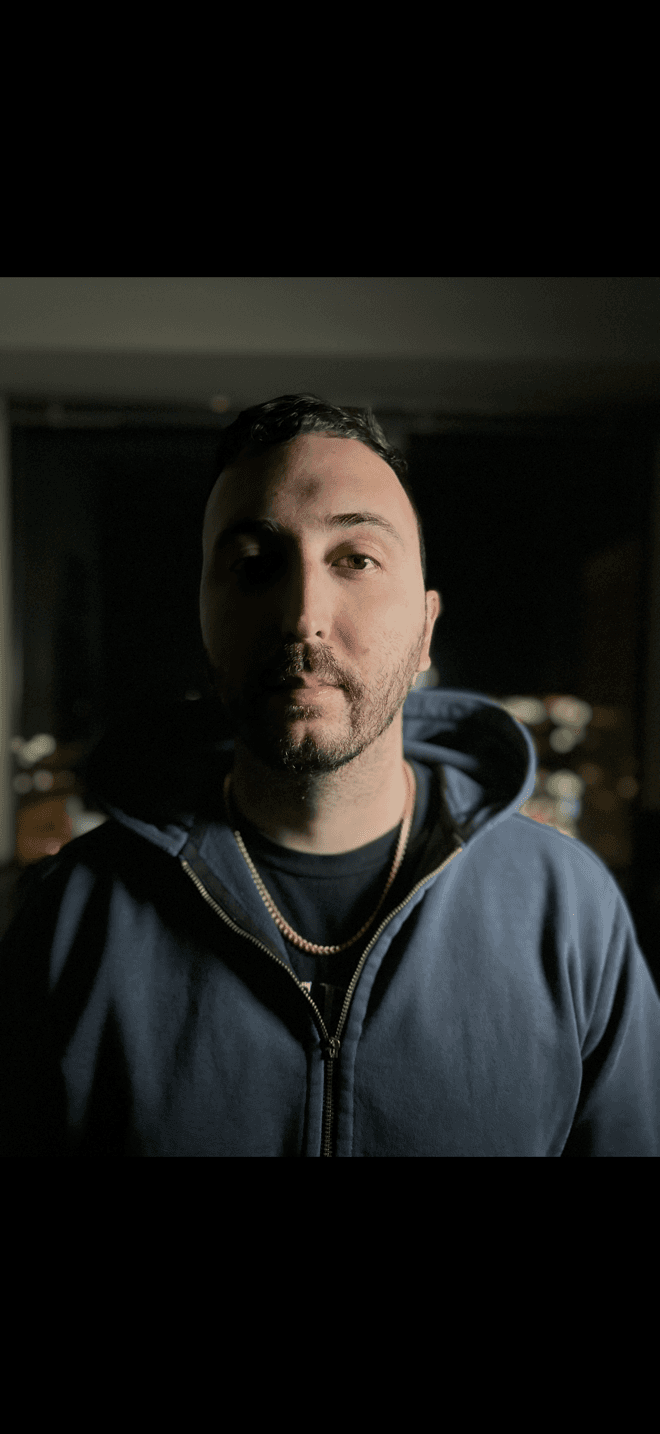
I'm Andrew. It's the name I was given at birth — through no input of my own, of course. But it's a fine enough name, I suppose, and it's not like anyone ever asks an infant if they want to be called Dave, or Steve, or...Abcde (Seriously. It's a real name, look it up.). Seems a bit rude, but whatever. In any case, I learned later in life that my name comes from the Greek root Andros, meaning "manly" or "brave"—and although I would never dare claim to be the living embodiment of either of those, I've always felt a special connection to one virtue in particular:
courage.
The courage to explore the hard, ambiguous, and sometimes stomach-turning realities of life. All in the pursuit of truth. And for as long as I can remember, I've been obsessed with that chase.
Truth comes at a cost, however; it is a double-edged sword. Resist it, and it will cut you down until you are an empty, bitter shell—angry at the world, angry at God, and left muttering 'Why me?' to the shadows. Yet, if you submit to its painful blows, that same blade trims away the excess until, like Michelangelo's David, you emerge fully realized.
Kierkegaard may have been onto something:
"There are two ways to be fooled. One is to believe what isn't true; the other is to refuse to believe what is true."— Søren Kierkegaard
Truth can be deeply edifying. When I was studying chemistry at university, nothing was more satisfying than watching an acid-base titration. A basic solution was titrated dropwise into a colorless acid solution until enough base was added that the pH reached what's known as the equivalence point. At that threshold, just a single, additional drop of base would instantly change the color of the solution from clear to a vivid, bright pink.
But some truths defy the logic of the laboratory. They offer no satisfying equivalence point.
How do we make sense of a seven-year-old girl waiting for a package of Barbie dolls, only to find herself in the back of a FedEx truck? Abducted, tortured, and brutally murdered by a creature more akin to a Lovecraftian monster than a man.
So, I've decided to stop looking away. Vesperal Beings is my attempt to map the geometry of the dark—to find the symmetry in the sovereign silence and trace the eternal threads woven through the mess of being here.
These are my field notes from the intervals. I don't have the answers, but I've found that the truth is often found in the quiet, sharp spaces between the points. I invite you to join the search.